
Rivers
Râuri. The country is cut by water that people still name before they name the road. A valley is often the river’s first, and the town sits where a bridge or a ford made sense.
Dunărea
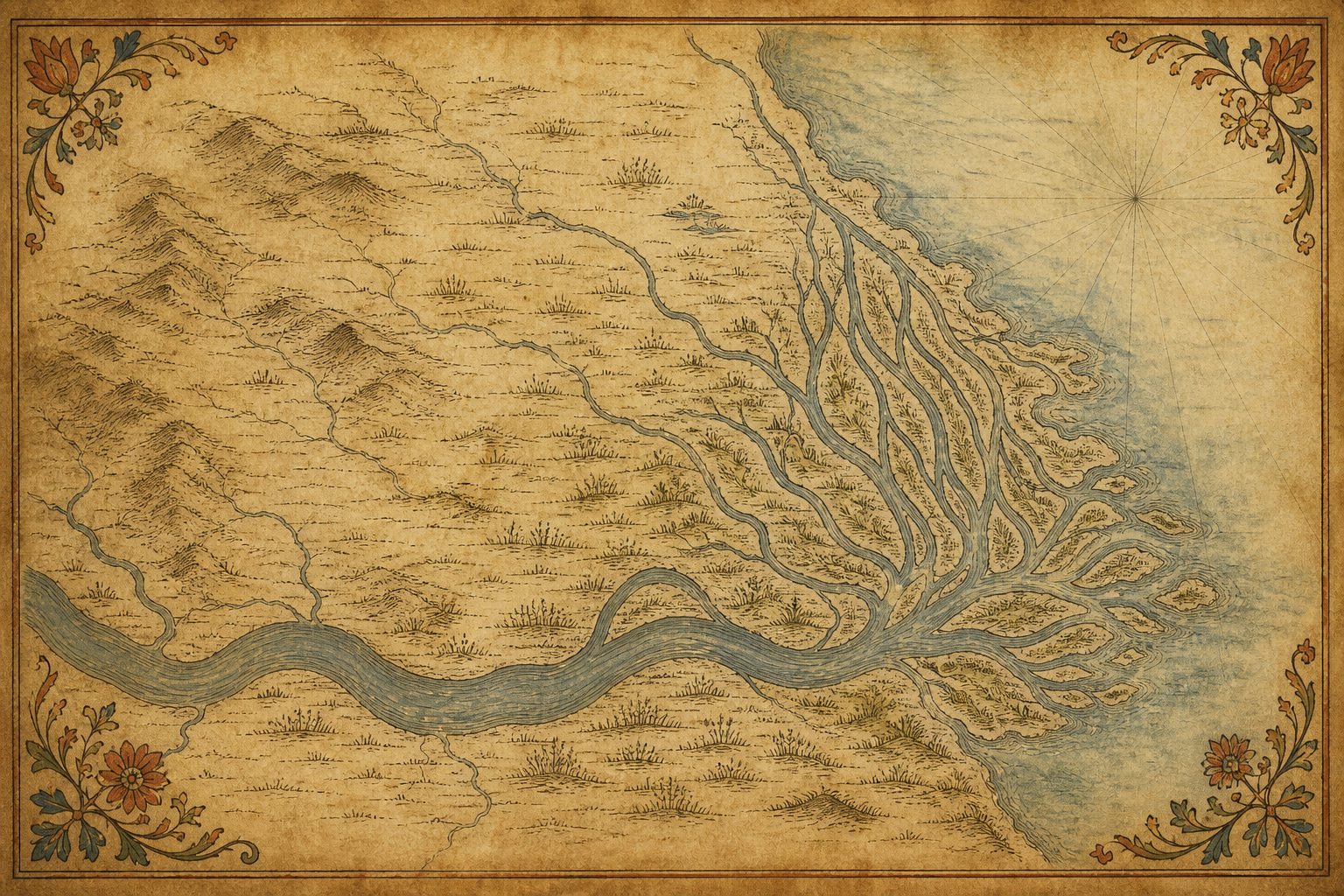
The Danube is the border and the highway at once. It comes in from the west, holds the south of the country for a long stretch, and then opens into the Delta before the Black Sea. Barges, ferries, and willow banks. In a dry summer the water drops and the islands grow. In a wet spring the low fields take the flood and people talk about it for years. Fishermen still work the quieter arms. The Delta is its own world — reeds, birds, houses on stilts — and it is not the same as the industrial river that passes Galati or the tourist stretch near the Iron Gates. That maze is on the delta page. One name, several rivers in practice. What lives in those reeds is on the wildlife page. Where that water meets salt, the story leaves the river — see the sea. The city at the window is the short lesson on Constanța.
Olt, Mureș, Someș
The Olt runs south out of Transylvania through a mountain corridor and into the Danube. Towns along it keep the river in their address the way other places keep a ridge. The Mureș crosses the middle of Transylvania west toward Hungary; it is wide enough that a child learns early not to trust a shortcut across the stones. The Someș (and its branches) waters the northwest. People say “pe Olt,” “pe Mureș,” the way they say “over the hill” — the preposition is the map.
Smaller rivers matter more day to day. A creek that turns the mill wheel — that job is on the mill. A stream that fills the well when the snow melts — the yard water on the well page often starts higher up the same slope. Flood marks painted on a bridge pier. A picnic place under poplars where the water is cold enough in July that nobody stays in long.
What the water still organizes
Market towns grew where a river met a road. Mills needed the fall of water. Wash-days used the bank before indoor taps. Sheep paths follow the valley floor because the grass is better there. Even when the highway ignores the old ford, the village calendar still notices the thaw and the first mosquitoes. The year page keeps the seasons; this page is only the water under them — see the year.
You do not need a complete list of tributaries. You need the habit of asking which river a story is standing beside. The answer is often shorter than a geography book, and more useful: Dunărea, Olt, Mureș, or the creek with no fame that still fills the bucket.