
Proverbs
Old sentences people still use. The English is the sense, not a word-for-word crib.
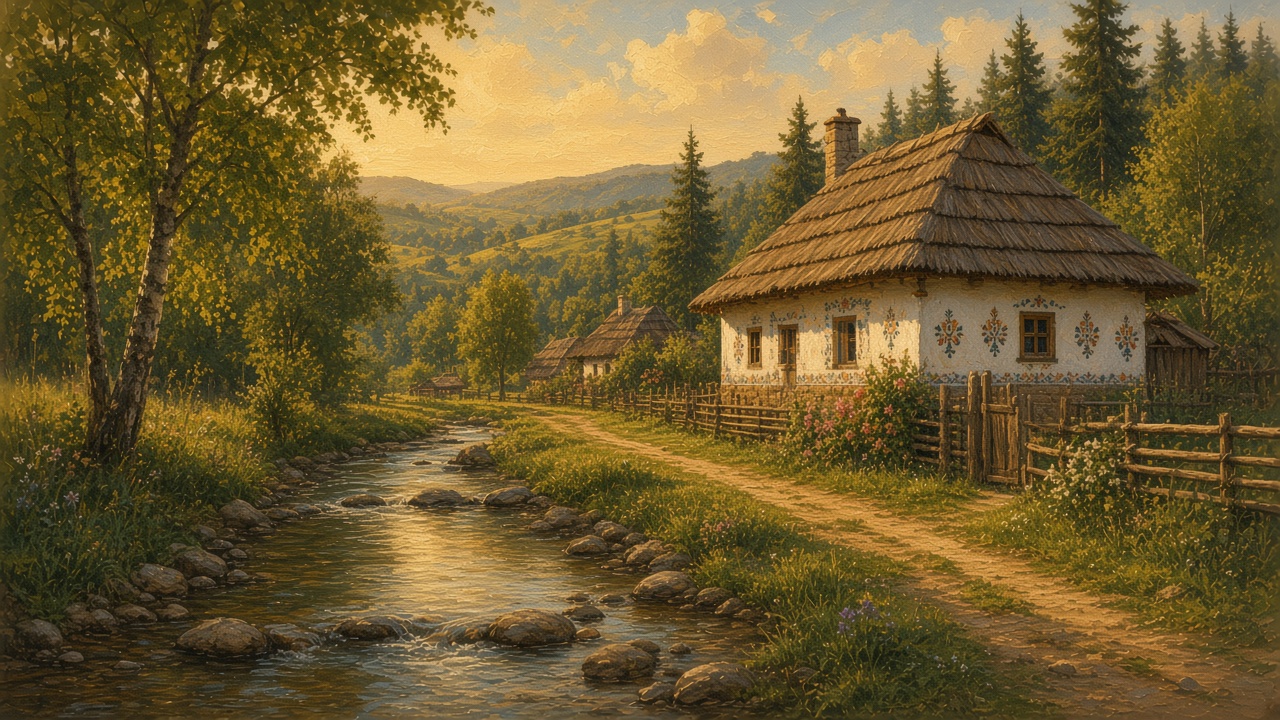
A proverb is not a lesson. Someone says it at the gate or at the table and sits down. The first one on this page is the one people still reach for: water passes, the stones stay. The rest are the same kind of short claim — work, bread, patience, a neighbor. They sit next to the word list, not above it. For the same words inside a day, read a story.
- Apa trece, pietrele rămân. Water passes, the stones stay.
- Cine se scoală de dimineață departe ajunge. The one who rises early gets far.
- Buturuga mică răstoarnă carul mare. A small stump can overturn a big cart.
- Vorba lungă, sărăcia omului. A long speech is a person’s poverty.
- Omul sfințește locul. The person makes the place holy. Character marks a house.
- Ce ție nu-ți place, altuia nu-i face. What you dislike, do not do to another.
- Lucrul rău nu piere cu una, cu două. A bad deed does not vanish at the first try.
- Cine sapă groapa altuia cade singur în ea. Who digs a pit for another falls into it.
- Banul e ochiul dracului. Money is the devil’s eye.
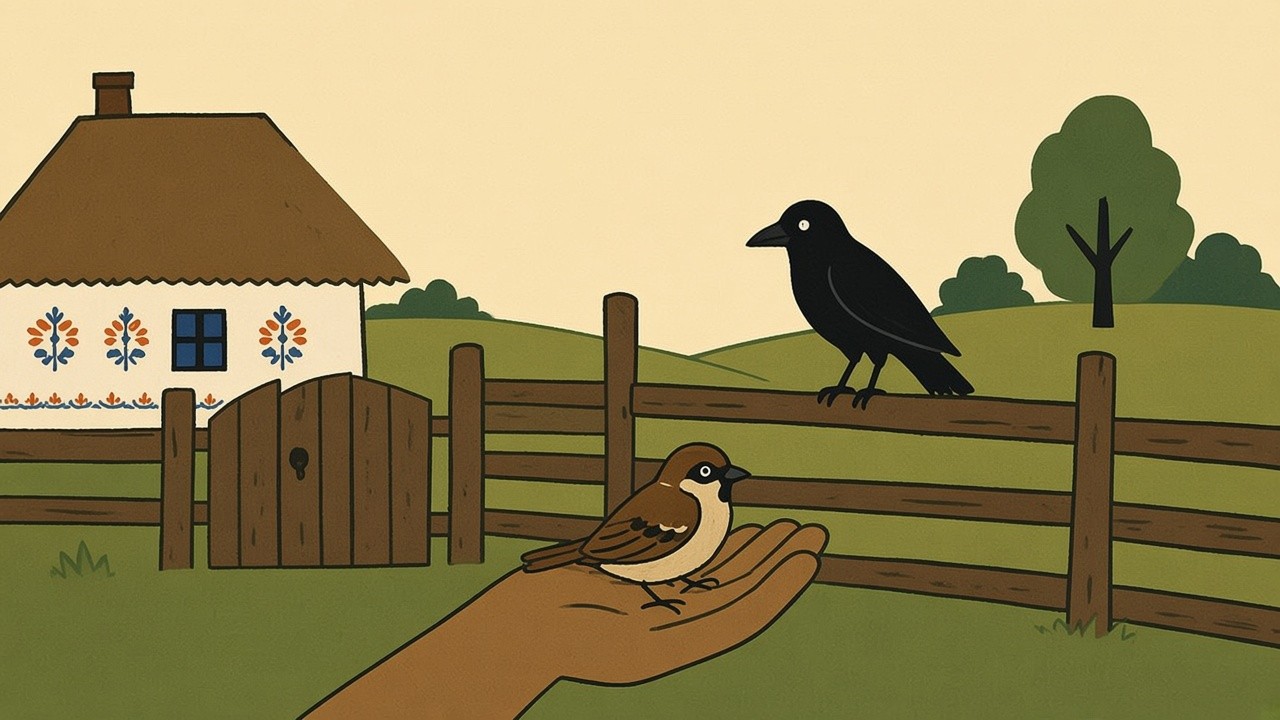
- Nu da vrabia din mână pe cioara de pe gard. Do not trade the sparrow in your hand for the crow on the fence.
- La plăcinte, înainte. First to the pies. Said of someone eager only when there is something to take.
- Cine nu are bătrâni să-și cumpere. Who has no elders should buy some. Ask someone who has already lived it.
- Fie pâinea cât de rea, tot mai bine-n țara ta. However bad the bread, it is better in your own country.
- Cu răbdarea treci și marea. With patience you even cross the sea.
- Hodina e sarea muncii. Rest is the salt of work.
- Prietenul la nevoie se cunoaște. A friend is known in need.
- Cine se frige cu ciorbă suflă și în iaurt. Who was burned by soup blows on yogurt too.
- Graba strică treaba. Haste spoils the work.
- Cum îți așterni, așa vei dormi. As you make your bed, so you will sleep.
- Tăcerea e de aur. Silence is golden.
- Cine râde la urmă râde mai bine. Who laughs last laughs better.
- Vorba dulce mult aduce. A sweet word brings a lot.
- Câte bordeie, atâtea obiceie. As many cottages, so many customs. Each house keeps its own way.
- Nu lăsa pe mâine ce poți face azi. Do not leave for tomorrow what you can do today.
At the gate
The line is said standing, and then the person sits. At the poartă a neighbor who has listened through a long complaint answers Vorba lungă, sărăcia omului — a long speech is a person’s poverty — and is finished. After a hinge hung too fast, someone still holding the hammer says Graba strică treaba. The English on this page is the sense. What you hear is the Romanian, once. Nobody opens a book at the gate. The carved oak is the other page. This is only the pause under it: one sentence, then the bench.
The crow on the fence
Nu da vrabia din mână pe cioara de pe gard. Do not give up the sparrow in your hand for the crow on the fence. The sparrow is the small sure thing — the work already started, the loaf on the board, the neighbor who came. The crow is louder and still on the rail. People say it when someone is about to drop a real piece for a better story. It sits next to the stump and the cart: Buturuga mică răstoarnă carul mare, a small thing overlooked is enough to turn the load. You do not need a fable book. You need the habit of looking at what is already in the hand before you answer the bird on the fence.
Some of these still name a thing this site already has a page for. Bread that is better at home sits by bread. Crossing the sea with patience sits by the sea. The house a person makes holy is on the house. A village still says one of these without opening a book — the sparrow already in the hand, or the stones still in the creek.