
Winter
Iarna. Not the feast list. The months when the yard goes quiet, the woodpile matters more than the garden, and the house keeps the year.
The yard and the road
After the last jar goes down, the yard changes jobs. Snow sits on the poartă. The path to the well ices and someone breaks a crust before the first draw. Chickens still walk, slower. The woodpile is the season’s account book: too low in November and January will argue with you. Mud freezes into ruts. A village lane can hold a car or it can hold a story about the car that did not make it. In town the plow comes; in a hamlet you wait, or you walk. The bus may skip a day. People still go out — for bread, for the doctor, for a funeral — but they measure the trip. The rooms of the house face this yard all year; in iarna the yard just asks more of the boots.
Ignat, and what the yard takes in
Around December 20 the household that still keeps a pig keeps Ignat. The saint’s day is on the calendar; the work is in the yard at first light. Neighbors come. There is steam, a fire, a table that will not look like a feast until later. The animal becomes sausages, slănină, tocătură, jars of fat, and the cuts that will sit in the cold room or the cellar until a name day needs them. It is not a festival poster and it is not gentle to write about, so keep the picture short: a day’s labor that feeds the winter, done with people who already know the steps. Town apartments buy the same meat at the shop. The word stayed. What autumn put in jars on the harvest page is the plant half of the same shelf. This is the animal half, timed to the cold so it keeps. The feast dates around it live on winter on the year. This page is only the weather and the work.
Heat, and what the house does indoors
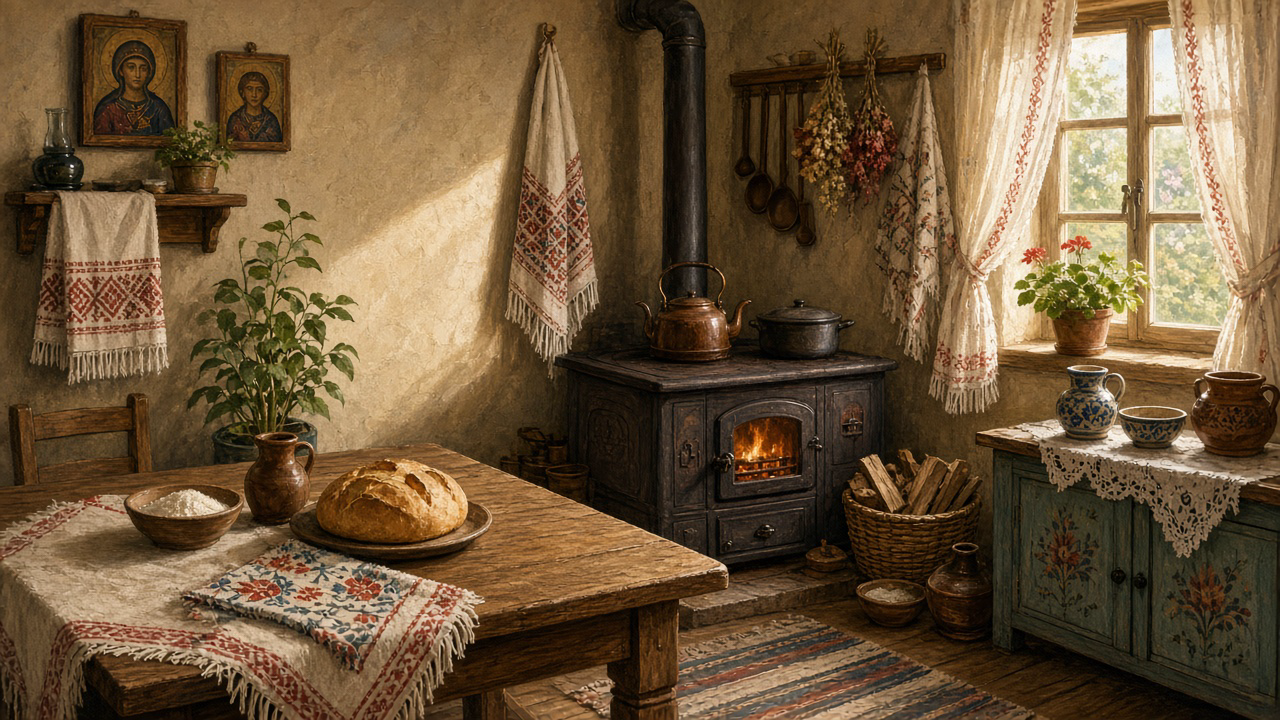
The sobă is the clock. Wood in, kettle on, the warm wall children lean against while gloves dry. Rooms that face north stay closed. The good room stays cleaner and colder; the family lives by the stove — the split mapped on the house. Evenings get long before the snow does. Cloth work comes back under the lamp — the older name for that company is a șezătoare. Cards, a visit, the radio or the television. Someone mends. Someone shells seeds. Children who still play outside find packed snow behind the house; inside they take the warm bench. You do not need a list of indoor hobbies. You need the habit of asking what the woodpile and the cellar are doing — the jars, the salt, the cuts that keep — and which room still has heat at nine at night. Christmas singing at the door is on colinde, not here. When the calendar opens again — Dragobete, Mărțișor — that turn is on the year. Until then iarna is the yard in frost, the road you think twice about, and the stove that has to last.