
Mărțișor
March 1. A red-and-white thread on a coat, often with a small charm. Not a parade. The mark that winter is being argued with.
What people pin
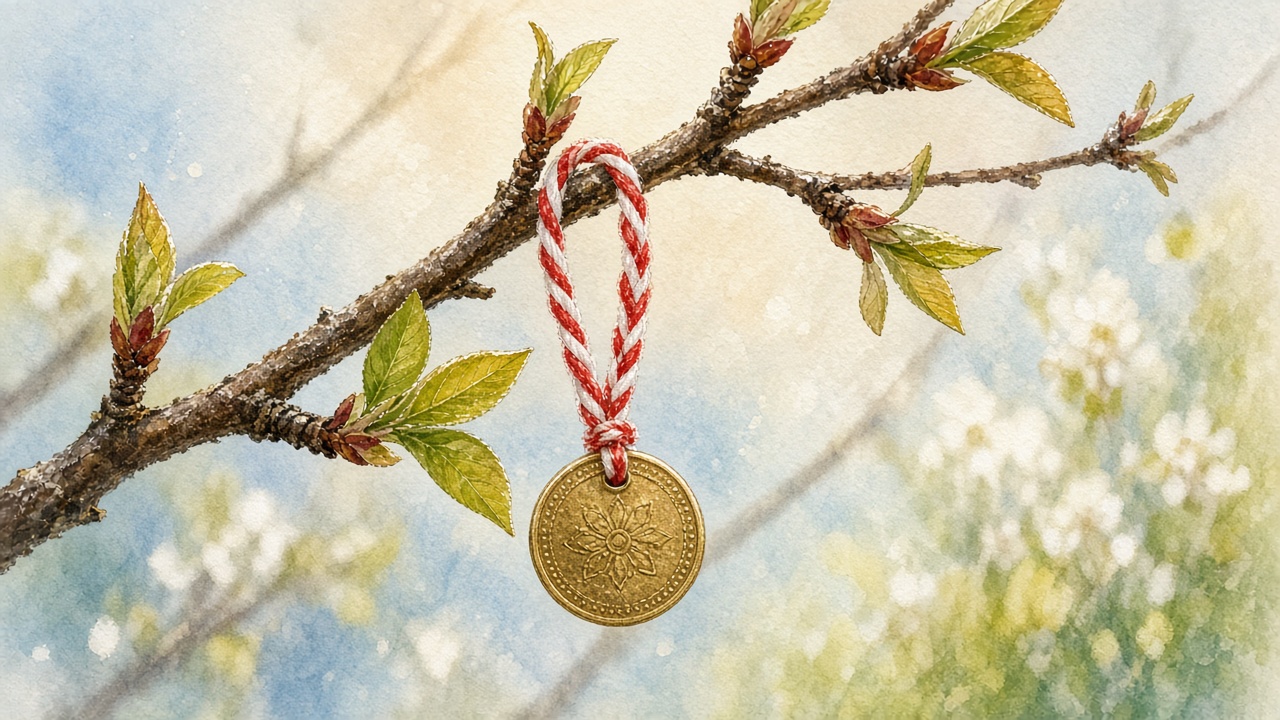
The thing itself is small. Two strands twisted together — red and white — a șnur, pinned at the lapel or the collar. Often a charm hangs from it: a coin, a flower, a handmade figure someone sat with the night before. Shop versions glue a plastic snowdrop or a heart onto a card. The name covers the whole object, thread and trinket together. A man may still pin one on a woman he walks with; a child gets one from a teacher or an aunt. The coat it hangs on is weekday cloth, not a costume — the longer dress map is on wardrobe. You wear it through early spring. When it comes off, the old habit is to hang it on a flowering tree or bush — a branch that has already opened — and leave it there. That is the end of the pin, not a ceremony with a ticket. A handmade charm, when there is one, belongs with the other small work of the house; see crafts.
Everyday, not a show
There is no procession. Towns put trays of them out in the last days of February: plastic, foil, a printed card, sold next to chewing gum. Those trays sit at the market with the rest of the square. Villages and families still twist a simpler one, or give one they made. A teacher pins them on a class. A neighbor leaves one in a palm. A handmade one may have been twisted the night before at a table that used to be a șezătoare. The point is not the object. It is the turn out of winter — the same turn the stove and the woodpile have been waiting for. After months of the yard in frost, a thread on a coat is how a lot of people say March has started. How a sat still marks that opening is on villages. The calendar that holds that hinge is on late winter on the year.
Not Dragobete
Late February holds Dragobete, a day for pairing and for the first birds. Towns now sell it as a Valentine with a Romanian name. It sits a few days before this thread and it is not the same custom. One is about who you walk with. The other is a pin you put on whether you are walking with anyone or not. Both sit on the year; only one of them is a red-and-white string. How a small gift sat in courtship, without turning this thread into a pairing day, is on romance.
The string
What gets twisted is a șnur: two threads, red and white, turned in the fingers until they hold. A house that still makes one does it the night before, or early on the first, while the lane is quiet. The tray at the kiosk is a finished one on a card. The handmade string is the same two colors, only the work of a hand. The old name of the month is in the word. Mărțișor is the little March. You give the month, small enough to pin.
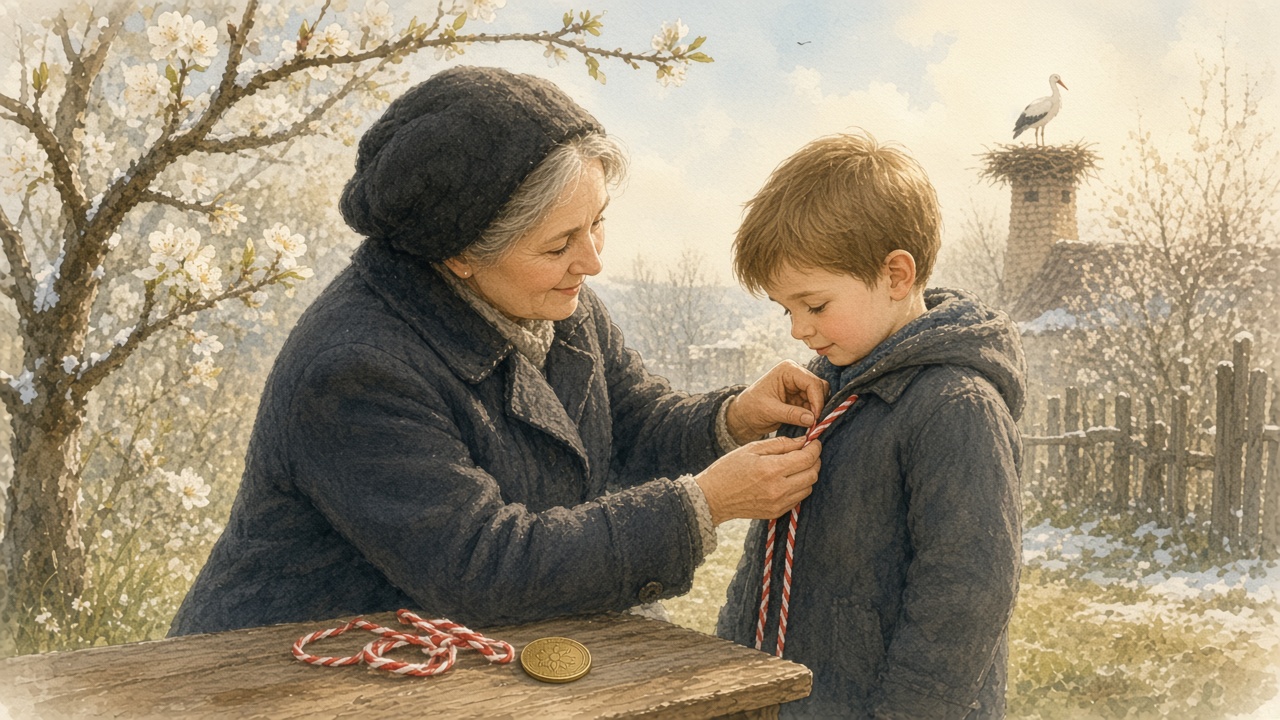
On the morning of March 1 it changes hands. A parent pins it on a child. A neighbor leaves one in a palm at the gate. Who pins it was already named — a man, a teacher, an aunt. Some houses pin it on the left of the coat. The charm, if there is one, was the night’s work: a coin, a snowdrop, a small figure. The giving is the custom. The card on the tray is only how a town has something ready when the morning comes.
The first blossom, and Dochia
You do not take it off on a date. You wear it while March is still arguing. The old signal is the first tree that opens — a corcoduș in the yard, the cherry plum, or an apple, whatever blossom the lane actually has — or the first stork on a chimney. Storks are that later week, when someone looks up and says they are back. Until one of those happens, the pin stays. Then the habit already named: you tie the string to a branch that has opened, and you leave it. The tree keeps it. There is no second ceremony.
The days you are still wearing it have their own name. The first nine of March are Baba Dochia’s days — zilele babelor, where a sat still says so. Some counts run longer. This page keeps the nine. She is the old woman on the Dragobete page: she takes the flock up, and a last freeze catches her. In the telling that matches the nine, she lets one coat go each morning, sure the cold is done. Not every house tells it. Where they do, someone may choose a day by a number and call it her own. Rain or clear, the talk follows. This page does not make that a forecast. The flock sits with shepherds. The string was already on before her first morning. Blossom or stork ends the pin — inside those nine days if the year is early, after them if it is late. Both sit on late winter on the year.
A string other yards know
Red and white March strings show up across the Balkans. Bulgaria’s martenitsa is the nearest cousin: same colors, same first of March, a different word. This page does not map them. It only notes that the Romanian pin is not a private invention, and that the season — not the souvenir tray — is what the colors are for. When the pin comes off, the tree that takes it is already arguing with frost. You do not need a color lecture. Red and white are the season, not a brand. The string is twisted on the first and tied off at the blossom; Dochia’s days are the weather in between. June will have yellow crowns on Sânziene. This is the March one: a thread, not a flower.