
The market
Târg for the village day, piață for the town square. Both mean people arrive with what they grew, made, or borrowed a cart for, and leave with what they could not raise at home.
Market day
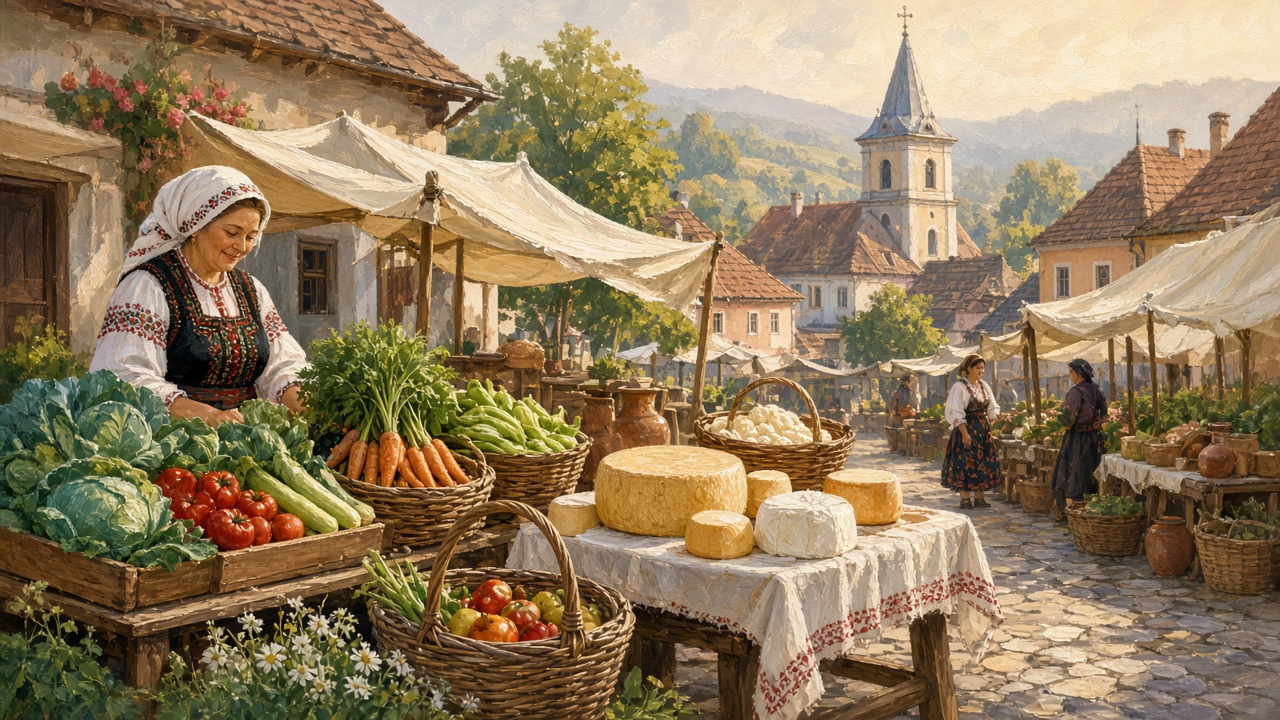
In a lot of places the week still has a named market day. Wednesday in one town, Saturday in the next. People leave early. A sack of potatoes, a crate of eggs, a wheel of soft cheese wrapped in cloth, a live chicken with its feet tied. Someone brings a knife to sell, or a stack of woven baskets. Someone else brings only a list and cash. The day is social as much as commercial: you hear who married, whose cow calved, which road washed out. The stalls are often boards on trestles, or the back of a van with the doors open. Shade is a tarp or a tree. By noon the best produce is gone and the talk gets longer.
What sits on the table
Season decides the table. Spring: greens, early radishes, seedlings in plastic cups. Summer: tomatoes that smell like themselves, peppers, cucumbers, peaches that bruise if you look at them wrong. Autumn: grapes, apples, squash, and jars of what the kitchen already put up. Winter: cabbage, root vegetables, smoked meat, and honey if someone kept bees. Cheese — telemea, caș, urdă — travels farther than salad. Bread from a village oven still turns up beside the industrial loaf — that split is on bread. Next to the food you may find a pile of secondhand clothes, a few tools, and a woman selling embroidered blouses or towels that belong to the same handwork as the crafts page. The store tab on this site is a picture. The market is the working version.
Town piață, village târg
A city piață can be daily and permanent: numbered stalls, a roof, a butcher who keeps hours. The village târg is often weekly and temporary, set up in a square, a roadside, or a field that empties when the last cart leaves. Both words get used loosely. What matters is the rhythm. The house sends out what the yard and the cellar can spare. It brings back oil, sugar, a bag of salt, a pair of boots, and news. The gate you pass through on the way out is the same house gate; the bag you carry back fills the kitchen that feeds the week until the next market day.
Not a souvenir strip
Tourist rows exist — painted eggs in a row, magnets, the same ia pattern sold three stalls running. Those are real too, and they pay rent. The ordinary market is quieter: people who already know each other’s prices, a scale that gets argued over, a child sent for parsley who forgets and buys a sweet instead. If you only see the souvenir edge, you miss the reason the day still holds. The market is how a village that cooks at home still meets the wider road without becoming a supermarket parking lot overnight.
Recipes on the home page assume ingredients that once came from a table like this. The harvest page is how the cellar and the cart got full before market day. The year page marks feasts and fasts that change what people buy. This page is just the square itself — boards, shade, and the weekly reason to leave the yard.