The wayside cross
Troiță, and the definite troița. Not the church in the middle of the sat. The smaller cross or shrine at a fork, a field edge, or the last bend before the houses begin — a place to stop without going in.
At the fork
A troiță stands where the road has to choose, or where the village wants you to know you have arrived. At a răscruce, at the edge of maize, at a bridge, at the rise where the next valley comes into view. You see it from the cart, later from the car, often before you see the biserică. It is not a monument you buy a ticket for. It is timber or stone that has been watching the same dust for longer than the people who still nod at it.
Some have a little roof. Some are only a cross. Flowers in a jar — plastic now as often as from the garden. A short prayer cut into the wood, a name, a year. The fence around a yard is a different claim; that carved oak is on gates. This one belongs to the road. The larger map of the lane, the shop, and whose dog that is sits on villages.
Oak, metal, stone
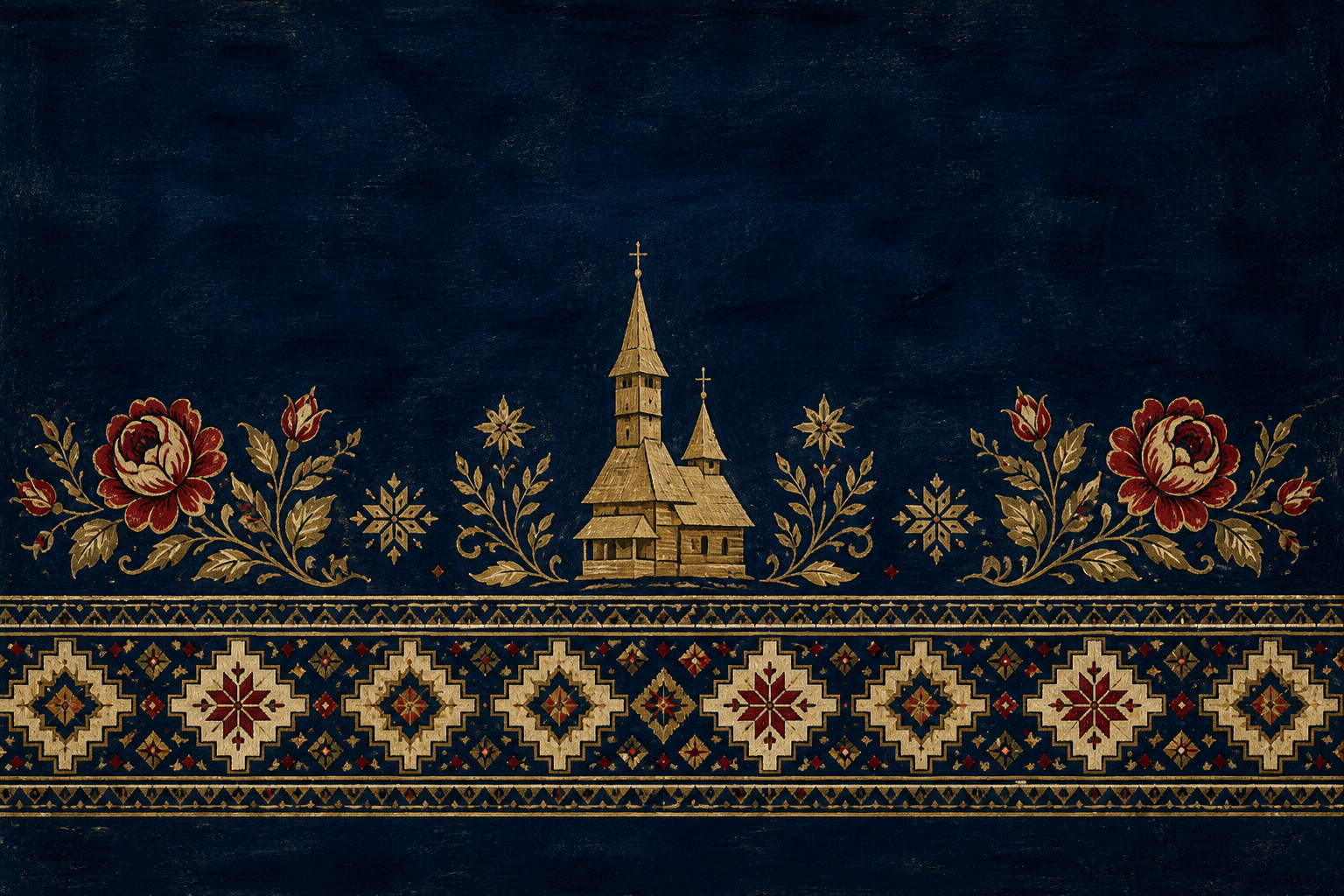
In the north the old ones are oak, the same timber as the church roof and the poartă. A carpenter who could notch a Maramureș nave could cut a smaller cross for the fork: rope motif, a sun, a niche for a candle. That craft sits with wooden churches and the valleys on North. Elsewhere you meet painted metal, a stone pillar, a concrete cross from a later decade with a tin roof that rattles in wind. The type is the same even when the material is not: a Christian mark at the edge of work, not only at the altar.
You do not need a catalog of famous troițe. Plenty of unmarked ones still stand in a commune that does not appear on a brochure. Weather-gray wood leans and still holds. Lichen in the cuts. A new one in metal because the oak finally went. An old one sitting behind a fresh asphalt curve that no longer needs that fork, and standing anyway.
A pause, a candle
A shepherd coming down with the flock, a man walking to the next sat, someone whose bus is late — they pause. A candle in the niche if there is a niche. The sign of the cross. A short prayer that does not need an audience. Belief, the parish, and the icon corner in the house are on Orthodoxy. The troiță is the same faith, only outdoors and unsupervised. Children are told not to play against it and then they lean on it anyway. On a feast someone refreshes the flowers. The rest of the year the wood does the watching.
When a household or a village raises a new one, a priest comes out to bless it, the way a house or a well is blessed. The day may sit near a hram or simply on a Saturday when people can gather. That calendar — the year as the parish keeps it — is on the year. You eat in the grass. You go home. The cross stays.
Between house, church, and road
A locked gate in winter may mean the family is away; the troiță on the approach does not leave with them. Between the house, the church, and the road, this is the mark that is nobody’s yard and everybody’s. The sat claims the lane. The biserică claims the Sunday. The troiță claims the in-between: the field path, the traveler, the shepherd, the person who is not going to liturgy this week but will still slow the car.
This page is only that pause: wood or stone, a candle niche, flowers, and the habit of knowing which fork still has one.