Short pieces written for this site, so the common words have a full sentence around them. Romanian first. English after, not a line-by-line crib.
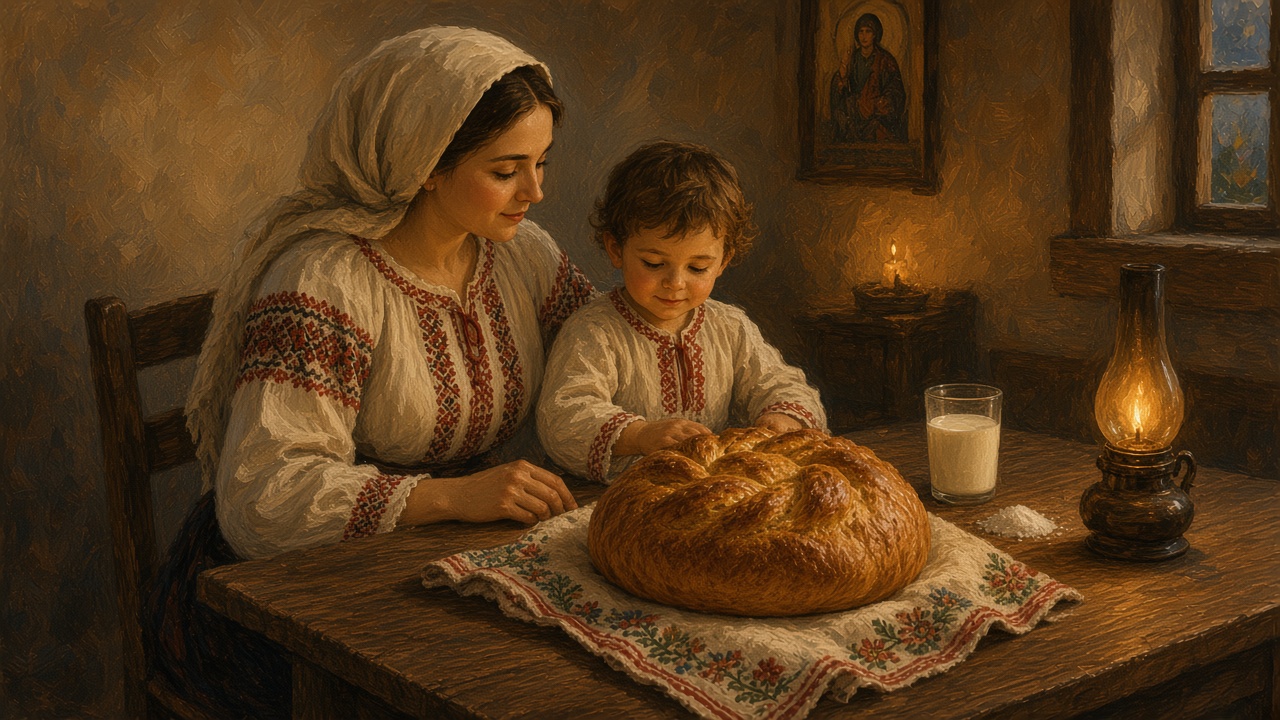
Imagined art — a room the sentences can sit in, not a photograph of one house
These are not folktales. They are a day you can already point to on this site: the well, the house, the road to the sea, the market, bread, a Sunday walk. The same stock as the word list. Read the Romanian first. The English is only so you know you have it.
La fântână
Era dimineață. O femeie a venit la fântână cu un copil. Apa era rece. Ea a luat apă și a dat copilului. Copilul a spus „mulțumesc”. Femeia a zâmbit. „Poftă bună”, a spus ea, deși nu era masă, doar apă și pâine în mână. Un om din sat a trecut pe drum. „Bună ziua”, a spus el. „Bună ziua”, au răspuns ei. Soarele era mic pe cer. Casa lor era aproape. Au mers încet, pentru că drumul era vechi și copilul era mic.
A woman and a child come to the well in the morning. She gives him cold water and bread. A man on the road greets them. They walk home slowly.
Seara în casă
Noaptea nu venise încă. La masă erau pâine, sare și un pahar de lapte. Tatăl a deschis ușa și a rămas puțin în prag. „Unde este mama?” a întrebat copilul. „Aici”, a spus ea din cameră. Au mâncat puțin. Nimeni nu a vorbit mult. Afară, satul era liniștit. Un câine a lătrat o dată, apoi nu. Copilul a vrut să rămână, dar ochii lui erau grei. „Mâine”, a spus tatăl. „Mâine vedem.” Au închis ușa. Lumina a rămas mică pe masă.
Evening at the table: bread, salt, milk. The father waits in the doorway. They eat little and talk less. The child wants to stay awake. Tomorrow, the father says.
Drumul spre mare
Ei au plecat din sat dimineața. Drumul a trecut pe lângă un râu, apoi pe lângă munți mici, apoi printr-un oraș. „Când ajungem?” a întrebat copilul. „Nu acum”, a spus femeia. „Mai târziu.” La amiază au mâncat pâine și au băut apă. Cerul era mare. Spre seară au văzut marea. Nu era ca râul. Era largă și fără capăt. Copilul a spus doar „uite”. Ei au rămas acolo, cu sarea pe buze și cu vântul în față. Casa era departe. Dar marea era aici, și pentru o clipă asta era destul.
They leave the village, pass a river and a town, and reach the sea by evening. The child only says look. The house is far. For a moment the sea is enough.
Ziua de piață
Era sâmbătă. Mama și copilul au mers la piață dimineața. Acolo erau mere, brânză și pâine. „Cât costă?” a întrebat mama. Femeia a spus un preț. Mama a cumpărat puțină brânză și două mere. Copilul a ținut mărul în mână. „Mulțumesc”, a spus el. Au mers pe stradă înapoi. Sacul era greu, dar nu foarte. Acasă, au pus mâncarea pe masă. Tatăl a zâmbit. „Bine ați venit”, a spus el.
Saturday morning at the market: apples, cheese, bread. The mother buys a little. The child holds an apple. They walk home with a heavy bag. The father is glad.
Pâinea bunicii
Bunica a făcut pâine. Casa mirosea cald. Copilul a venit la ușă. „Poftă bună”, a spus bunica. Ea a tăiat pâinea și a pus sare pe masă. Au mâncat împreună. Laptele era rece. Pâinea era încă caldă. „Cum e?” a întrebat ea. „Bună”, a spus copilul. Afară ploua puțin. Ei au rămas la masă. Bunica a zâmbit și nu a spus mult. Pentru copil, asta era destul.
Grandmother bakes bread. The house smells warm. They eat with salt and cold milk. Outside it rains a little. She does not say much. For the child that is enough.
Duminică la biserică
Duminică dimineața, satul era liniștit. Familia a mers la biserică. Drumul era scurt. Înăuntru era lumină și pace. Copilul a văzut icoanele și a tăcut. „Bună ziua”, a spus un om din sat. „Bună ziua”, a răspuns tatăl. Au rămas puțin. Apoi au ieșit în soare. Mama a luat mâna copilului. „Acasă”, a spus ea. Au mers încet pe drumul vechi. Clopotele se auzeau încă. Casa era aproape.
Sunday morning the family walks to church. Inside there is light and quiet. A neighbor greets them. They leave into the sun. The bells are still there. Home is near.
Seara de iarnă
Afară era frig. În casă, soba era caldă. Mama a pus pâine pe masă. Tata a adus lemne. Copilul a stat lângă peretele cald. „Mai stai”, a spus mama. Ei au mâncat puțin. Afară, satul era tăcut. Un vecin a trecut pe drum și a spus „bună seara”. „Bună seara”, au răspuns ei. Apoi au închis ușa. Lumina a rămas pe masă. Pentru iarnă, asta era destul.
Winter evening. The stove is warm. They eat a little. A neighbor says good evening on the road. They close the door. For winter that is enough.
The list those sentences come from is on words. The old set phrases sit on proverbs. The rooms and the road are on villages and the house. The cold months of that last piece are on winter. A translator uses the same stock if you want one word at a time.