
Why the walls are painted
The churches of northern Moldavia were built to be read from the yard.
A church in this part of the world is rarely only a church. In the villages of northern Moldavia, from the late fifteenth century into the sixteenth, princes and local patrons built small stone churches and then covered the outside walls with painting. The most famous stand near Suceava and in the valleys above it: Voroneț, Moldovița, Sucevița, Humor, Arbore. People now travel to see the color. The first audience was the people who lived there, many of whom did not read a book and did not need to. The wall was the book.
The subjects are not decoration in the modern sense. There is a last judgment, a tree of Jesse, sieges, saints, and sometimes a scene of the siege of Constantinople. They sit in rows, like a procession you can walk. A person standing in the grass could find the story they already knew from hearing it, and find their own place in it. That is a different use of paint than an altarpiece meant for a donor in a city. It is public teaching, set where weather could reach it, which is why so much of it is surprising for having survived at all.
Voroneț is known for a blue that does not have a simple modern mix-from-a-tube story. The pigment has been studied. Azurite and other minerals are part of it. What visitors remember is that the blue still reads across a field. The other churches keep different surviving notes: greens at Arbore, a tighter courtly line at Moldovița, the fortified look of Sucevița with its walls. Together they are a group, not a single style frozen on one day. Painters and workshops moved. Princes died. A church finished under one patron might be painted under the next.
Stephen the Great, who ruled Moldavia in the later fifteenth century, is attached to this landscape because he founded and endowed many churches after campaigns. Not every painted wall is his, and not every church he founded was painted outside. The habit of exterior painting belongs to his reign and to the decades after it, when Moldavia was Orthodox, relatively small, and constantly explaining itself to larger neighbors. A painted church on a ridge is a claim: we are still here, the feast days still happen, the dead are still named.
The defenses around some of these churches matter as much as the frescoes. Sucevița looks like a small fortress because it needed to. A monastery in a borderland held grain, people, and manuscripts. The painting assumes a peace long enough to finish a wall. The wall assumes a peace that might not last. Both can be true of the same building.
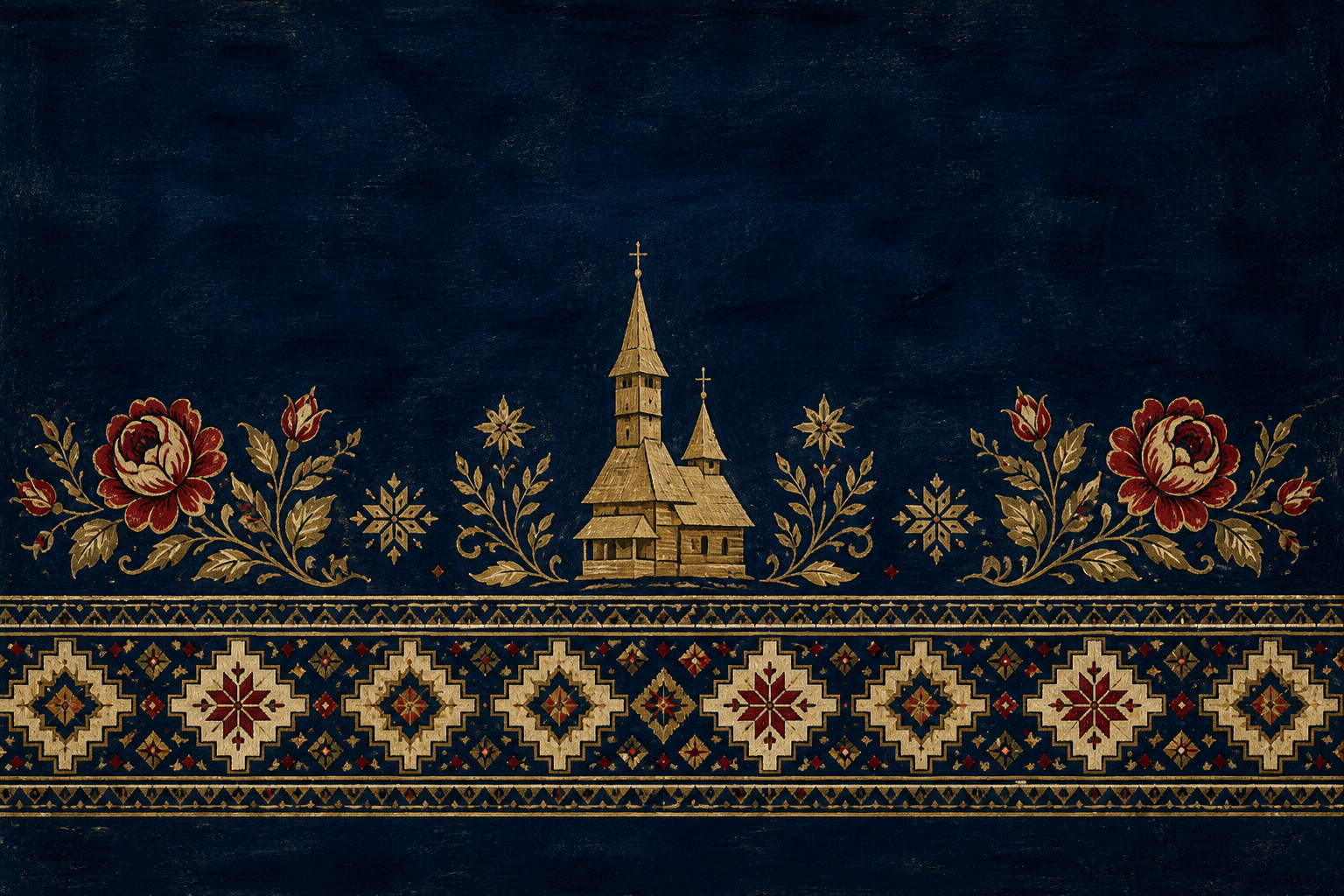
When a picture on this site shows a painted wall, it is imagined, not a document of one church on one afternoon. The lesson is the use of the wall. Color was a way to keep a faith and a story in front of people who would not own a printed book for a long time yet. If you stand in one of those yards now, the tourism is real and the silence is also real. The paint was meant to be walked past on an ordinary Sunday, not collected as a national symbol. It became one later, because it was still there.